Early Childhood Development (ECD)
The first few years of life are crucial to every child’s development. Together with partners, UNICEF works around the world to establish the foundations for children to grow, learn and thrive. Learn more about early childhood development (ECD) and how UNICEF supports young children, parents and caregivers.
A child's first three years lay a foundation for the rest of their life
Early Childhood Development (ECD) refers to the physical, cognitive, linguistic and socio-emotional development of children from before birth through age 8.
Supporting ECD means supporting every part of a young child's development during the earliest and most formative years of life. More than 1 million neural connections are formed every second during these early years — a rate of growth that never happens again. Healthy development begins even before birth, making access to maternal health care an important part of supporting ECD.
By age 3, a child's brain is almost fully formed
Over 80 percent of a child's brain is formed by the age of 3. The care a child receives during the first three years can have a lasting effect on their future health, learning and well-being. The quality of a child's early experiences can establish either strong or weak foundations for future behavior.
What a child needs for healthy early childhood development
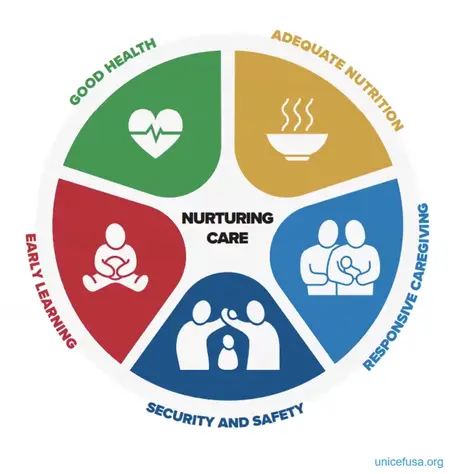
For a child to achieve their full potential, they need health care and nutrition, protection from harm, a sense of security and opportunities for early learning. They need responsive caregiving — interactions with loving parents and caregivers that include talking, singing and playing.
All of these things act as fuel for growing bodies and nourishment for developing brains.
UNICEF’s parenting resources offer practical guidance for supporting children at different ages and stages. Access to children’s health services can also help families support healthy growth and development.
Challenges that can negatively impact early childhood development
Millions of children around the world — children living in poverty, children in conflict zones, migrant and refugee children, children with disabilities and children belonging to communities facing discrimination — often miss out on the kind of care and stimulation they need for healthy development. They are growing up exposed to violence, polluted environments and extreme stress.
Globally, nearly 1 in 4 children under age 5 are not growing well due to malnutrition, and nearly 3 in 10 children ages 3 and 4 are not developmentally on track, based on data from 74 UNICEF program countries.
A 2019 UNICEF report found that more than 175 million children were not enrolled in pre-primary education.
These challenges are often interconnected. Limited access to health care, nutrition, protection or early learning can affect multiple areas of a child’s development at the same time.
How UNICEF supports early childhood development
Together with partners, UNICEF provides parents and caregivers with resources and services they need to ensure their children are able to build the strong foundation they need for life.
Programs are adapted to the needs, resources and cultural context of each community. Depending on the setting, UNICEF may combine health, nutrition, protection, responsive caregiving, early learning and support for children with disabilities. This includes expanding access to early childhood education and helping children build foundational skills before they enter primary school
Here are some examples of how UNICEF has supported ECD in specific countries.
- In Bhutan, UNICEF supported the government’s development and implementation of an early childhood strategy, including the National Parenting Education Program, which helps parents with little or no education build the skills needed to effectively support their child’s development, such as using everyday settings for learning experiences.
- In Jordan, UNICEF helped implement a Positive Parenting Program, which has provided childcare skills training to hundreds of thousands of parents and caregivers, benefiting nearly half a million children. Innovative activities and instructional videos were categorized by age for children from birth to age 5.
- In Mongolia, UNICEF has supported early education programs for children in remote herder communities, including the summer mobile kindergarten and "Teacher with a Tablet," where kindergarten teachers set up classrooms in remote areas where families have settled for the season and offer learning opportunities for youngsters as well as their parents using tablet-based learning materials.
- In Panama, UNICEF coordinated with the Ministry of Health to implement the Kangaroo Family Care Program, which gives premature or low birth weight newborns with stabilized vital functions 24-hour skin-to-skin contact with primary caregivers. Using an elastic fabric wrap for support, the baby is held against the bare chest of the mother, father or caregiver for direct contact, strengthening the parents’ emotional bond with their baby and increasing their confidence as caregivers while reducing the newborn’s feelings of separation.
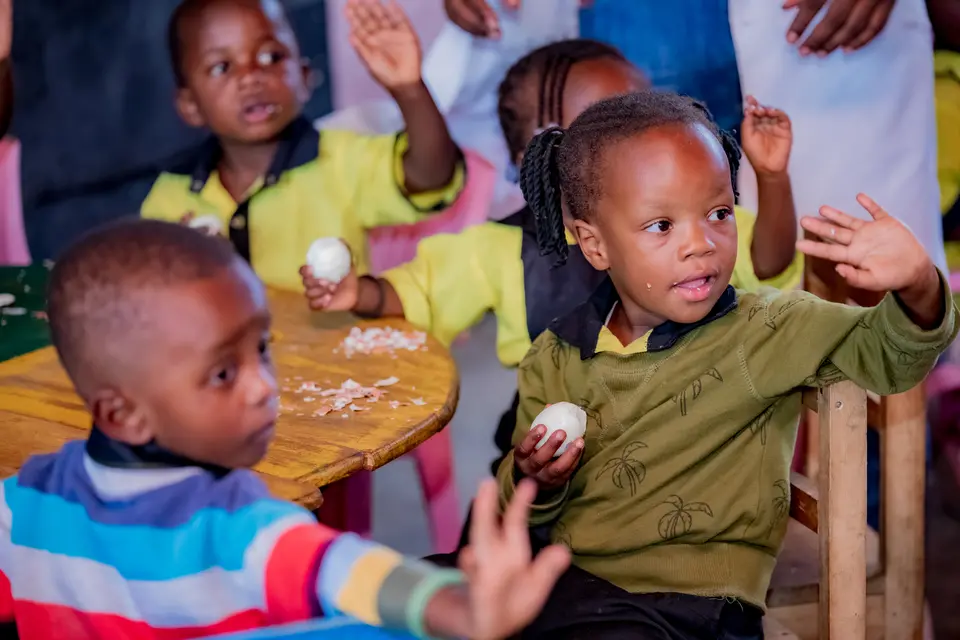
- In Rwanda, UNICEF collaborated with the government to launch innovative ECD programs and vital childcare support to families at centers serving workers in border regions, mining and tea industries, and busy markets. These centers help children grow and learn in safe, nurturing environments while empowering mothers to work and support their families.
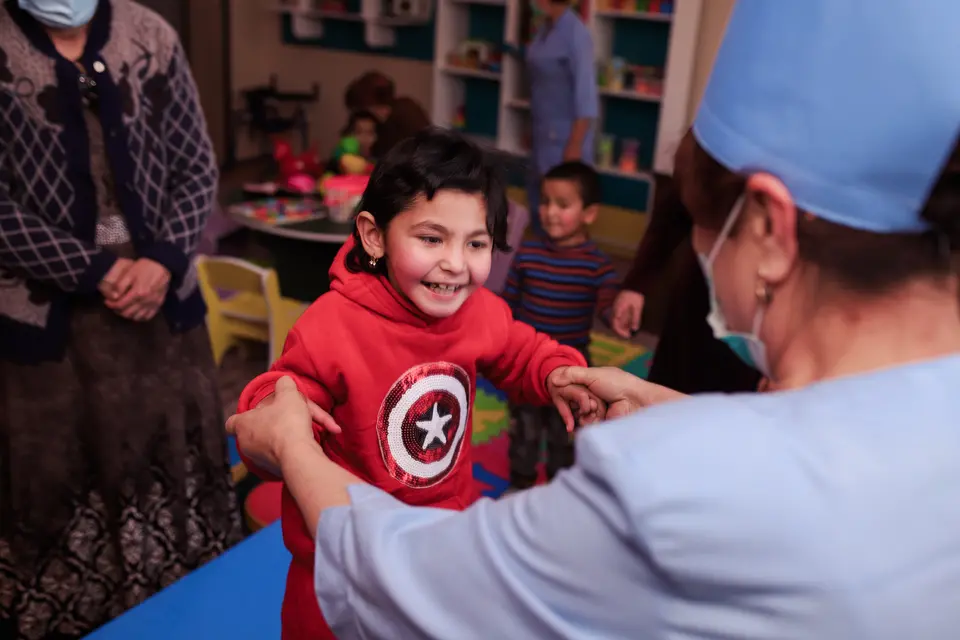
- In Tajikistan, UNICEF worked closely with the government to promote family-based care for children, including helping to transform the system of residential childcare institutions into family centers where young children with developmental delays and disabilities can access community and family-based support, including early interventions, without being institutionalized.
The UNICEF ECD kit: supplies to support children in emergencies
When UNICEF responds to an emergency, the global supply operation kicks into high gear, rushing critical items that meet urgent needs for safe water, health care, protection and nutrition. That's not all, though: children caught in conflict or climate disaster need other forms of assistance to maintain the level of engagement that is so crucial for healthy development. Providing ECD support is also a form of psychosocial support for children in stressful and traumatic situations.
The UNICEF ECD supply kit is packed with a range of materials specifically for infants, toddlers and preschool-age children and their caregivers — items to support positive, stimulating interaction, such as puzzles, puppets and building blocks.
Learn what's inside a UNICEF ECD kit
Frequently asked questions about early child development
What is ECD, or early childhood development?
Early childhood development (ECD) refers to the physical, cognitive, language, social and emotional ways children grow, learn, communicate and form relationships during their first years of life.
What ages are included in “early childhood”?
Early childhood generally extends from birth through age 8, although healthy development begins before birth with maternal health and care.
What is the importance of early child development?
The earliest years help establish foundations for children’s health, learning, relationships and emotional well-being. Nutrition, protection, responsive caregiving and opportunities to learn all support healthy early childhood development.
How does UNICEF support early childhood development?
UNICEF works with governments and community partners to strengthen health, nutrition, education, child protection and family-support services and guidance for young children and their caregivers. Early childhood development programs and materials are central to UNICEF's global efforts to give children their best start in life.